

A Food panda wrote in to Singapore Uncensored with the following email:
“For more than a year, many riders working under Foodpanda Singapore have been raising concerns over what they describe as an unfair and exploitative payment structure involving “same-vendor stack orders.”
Since the platform introduced dynamic fare calculations in 2025 — a system supposedly designed to account for factors such as delivery distance, peak-hour demand, and bad weather conditions — riders noticed one glaring exception.
Whenever two customer orders are stacked from the same merchant, the payout appears to be hard capped at exactly $3.21, regardless of:
- Total delivery distance
- Peak-hour multipliers
- Rain surge incentives
Riders across Singapore have repeatedly reported receiving the same fixed amount even for deliveries requiring significantly longer travel distances during heavy rain or high-demand periods.
This raises a serious question:
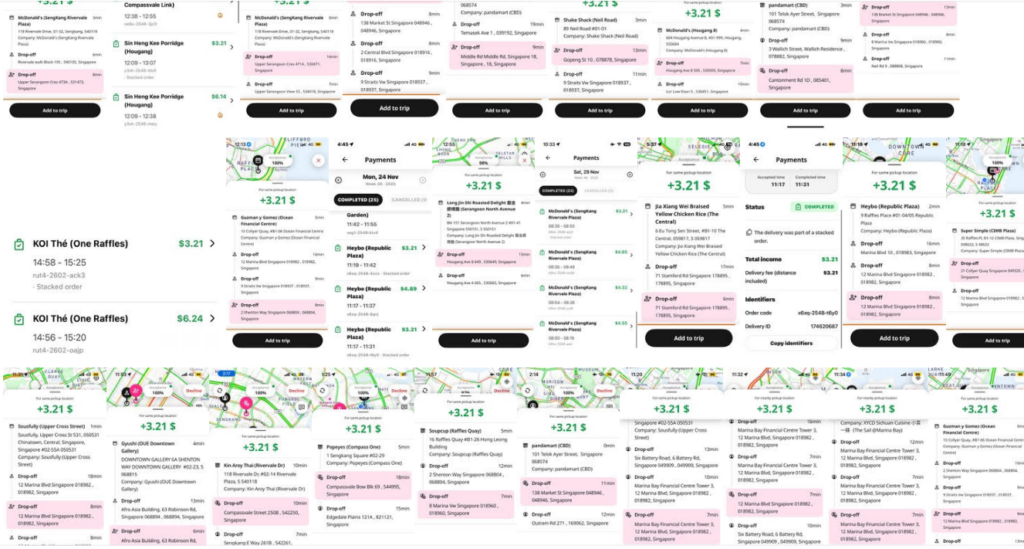
If Foodpanda claims fares are dynamically calculated, why do same-vendor stack deliveries appear to bypass the entire dynamic pricing model?
For many riders, this issue is not simply about low pay. It is about transparency, fairness, and whether the platform is deliberately suppressing rider earnings under the guise of operational efficiency.
The practical effect is easy to understand. A rider may accept what appears to be a profitable stacked order during a rain surge, only to later discover the second delivery contributes almost nothing to the total payout. In some cases, riders claim they effectively perform two deliveries for little more than the price of one.
This has created growing frustration among delivery workers who already face rising operational costs, unpredictable income, and increasing pressure from algorithmic systems they cannot challenge or negotiate with.
More concerning is that riders claim this issue has already been brought directly to both Foodpanda management and the National Delivery Champions Association (NDCA), the food delivery union that is supposed to represent gig workers’ interests.
According to riders, feedback has been ongoing for months through internal channels, rider forums, escalation tickets, and direct communication. Yet no meaningful clarification, adjustment, or public explanation has emerged.
This silence is becoming difficult to ignore.
If a union exists to advocate for riders, workers are now asking:
- Why has there been no public response regarding the $3.21 stack fare issue?
- Has the NDCA formally challenged Foodpanda on this payment structure?
- Were riders consulted before these compensation mechanisms were implemented?
- Does the union consider this fare model fair compensation for labour performed during peak and adverse conditions?
These are questions journalists and labour advocates should be asking openly.
Singapore’s gig economy increasingly depends on delivery workers who keep food and logistics moving daily, especially during storms, late nights, and public holidays. Yet many riders feel they are treated as disposable components inside opaque algorithmic systems where payment logic cannot be independently verified.
The public often sees only delayed deliveries or unavailable riders during bad weather. What they do not see are riders calculating whether a stacked order is financially worth taking — only to later discover that additional effort translated into almost no additional compensation.
This issue deserves scrutiny not just from consumers, but from journalists, policymakers, labour organisations, and regulators concerned with fairness in platform work.
If dynamic pricing applies to customers, riders are asking why it seemingly does not apply equally to them.
The core issue is simple:
Why is a stacked delivery still exactly $3.21 regardless of distance, demand, or weather conditions?
And why has nobody meaningfully addressed it?”