Sixon Jenelyn Villaruel, 38-years-old, pleaded guilty to stealing from her employer and was sentenced to 7 months imprisonment, according to Shin Min Daily News.
She had reportedly owed loansharks and stole watches, gold necklaces and more than $7,000 in cash on multiple occasions/
The items stolen were worth about $17k, of which she epent about $15.6k.
Her employer, Yan Xiucheng found her watch missing and saw a similar one to hers being sold on Carousell.
It was selling at half the price of its $1,000 worth.
She noticed that the Carouseller’s username was Jen, which seemed similar to her maid’s name Jenelyn, and that the profile picture looked like her maid.
The employer then posed as a buyer and arranged for a meetup with the seller the same day at an MRT Station/
The maid was then ambushed by the police and arrested.
Image source: Unsplash and Carousell (Images used for illustration purpose only)
A Facebook user highlighted how society is like compare to the Squid games and he describes it as it portraying similar things we see in life
Here is what he posted on Facebook:
After staying up all night to watch the entire Netflix series Squid Game in one sitting, I may finally understand why it’s become such a global hit. A deeply unequal society where the debt-ridden underclass gambles their lives away for a financial jackpot could be a description for any number of countries, not just Korea, in this new gilded age.
But some details in the show are distinctly Korean, like a South Asian migrant worker owed months of back wages by a callous Korean boss (a familiar tale in local media), a struggling North Korean defector (a frequent target of discrimination as a group), and a factory worker forced into early retirement ten years ago and down on his luck after opening two eateries that fail (a common scenario following the 1997-8 Asian Financial Crisis).
The name of this last character Seong Gi-hun’s fictional automotive company employer—“Dragon Motors”—is even an unambiguous reference to the very real South Korean firm Ssangyong (“Double Dragon”) Motors, which underwent restructuring 12 years ago and shed some 2,600 jobs.
But the most ‘Korean’ aspect of the show, at least in my view, is the use of personal debt as a plot device. Few foreign media seem to pick up on what 빚—as Koreans call a loan—signifies in the Korean context, and why some might risk death to pay it back.
The character Seong’s situation illustrates the harsh reality. On paper he owes 70 million KRW (59,000 USD) to loan sharks who make him sign away his body as a collateral (for organ harvesting). But later we hear that he in fact owes 160 million KRW (135,000 USD)—more than double the principal. Korean viewers can easily guess why: it’s not unheard of that private lenders apply illegally high interest rates (as much as 300 percent). Some 400,000 South Koreans are said to be in thrall to loan sharks because they don’t qualify to borrow from legitimate financial institutions.
Korea is a heavily indebted society, not because it’s so easy to take out a credit. Interest rates for borrowing are high even at the four major retail banks. More than 4 percent is considered usual though with a home as collateral the rate may fall below 3 percent—if one has no other outstanding loan. (In comparison German banks are currently offering something between 0.6 and 2 percent, depending on the borrower.)
When banks turn one away, borrowing may still be possible at the so-called “secondary banking establishments” (credit unions and insurance companies). There one can expect rates between 7 and 20 percent. High but legal. Credit card loans, usual in Korea, accrue around 13 percent in interest.
Many who can no longer borrow from or have no money to pay back these legitimate institutions turn to private lenders (Kr. 사채업자), i.e. loan sharks, who provide short-term respite but end up inflating the debt manifold through exorbitant triple-digit rates. Since the practice operates outside the law to begin with (as of this year 20 percent is the highest interest rate allowed by regulators), such lenders also have no qualms about resorting to shady means for recovering their money. The ‘players’ of Squid Game fit this profile of desperate borrowers trapped in debt bondage.
Korea looks rich but its debt crisis is worsening and the show is keen to depict it. In one scene a TV blasts a news report about growing household debt. It is “increasing at the second-fastest speed in the world,” reads the caption but the actual problem in real life is even direr: Korean household debt is now equal to the country’s annual GDP (in Germany and the US the household debt-to-GDP ratio is 0.59 and 0.8 respectively, I read).
I wasn’t given to thinking much about it until a Korean friend confessed to me last year that he was living precariously from a pay check to a pay check. I was shocked. He is a normal office worker at a well known company. He doesn’t strike anyone as extravagant. He has an apartment and a car. He travels sometimes with his wife and children. “It’s all paid for by loans, I am telling you,” he shrugged. “We just have no money.” Naturally he also cannot pay it back in full and is using yet more loans to meet only the most urgent payment obligations.
The Bank of Korea is warning that all the real estate purchases, stock investment and cryptocurrency acquisitions in recent years have fueled the debt crisis even more. People are borrowing money to invest and shop and buy apartments they cannot afford. This is fine as long as asset prices stay high. But if the prices fall—as it’s expected when the benchmark interest keeps rising and borrowers default on payment installments—Korea may become a squid nation full of debtors.
A real squid game may not be so far-fetched at that point.
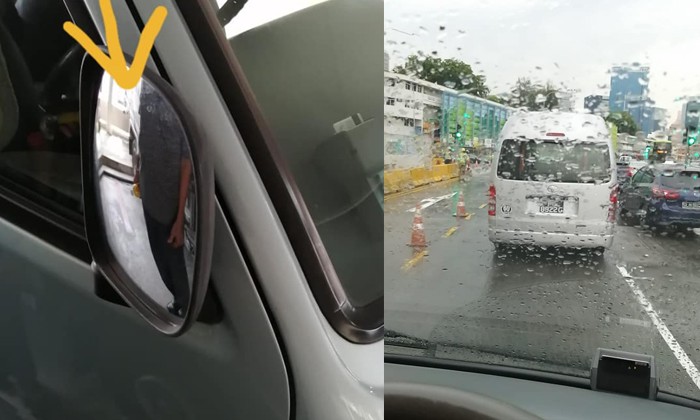
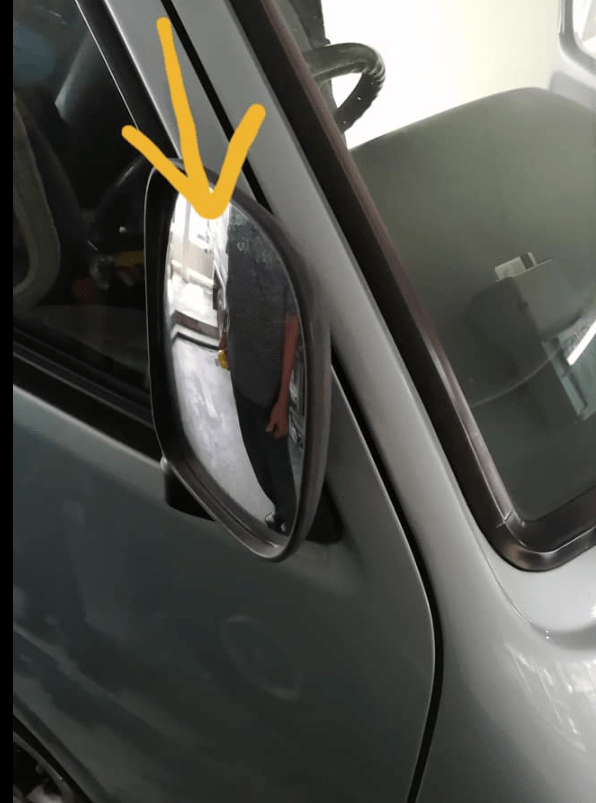
This silver van squeezed through my dad’s van and making his view mirror to the extreme right. My dad rolls down the window and this guy driving the silver van of 8922 keeps scolding vulgar language non stops at him when this 8922 is in the wrong!
Do be careful if anyone bumps into this van driver!
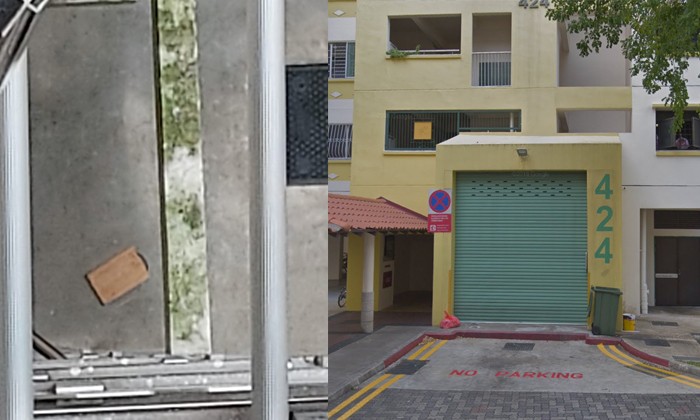
hi i would like to make a complaint about this incident that happened at blk 424 canberra road at around 6pm today(2 October).
someone from level 11 – 14 ( not clear which level did it ) threw down a huge chopping board. so this is why we made a police report about it and the police came. After that, they informed us that they found the chopping board and left. After a while, the chopping board was being taken.
I then called the police and told them that the chopping board was taken. So the police replied saying that they had found out who was the one that did it and said that there was no one injured. thus the case was closed and even said that the culprit did not do it intentionally.
The fact that who would even put a goddamn chopping board outside the kitchen window to sun it . My clothes were hanging outside to dry. That’s the reason why i heard a ‘ Ping Pang Ping Pang ‘ sound , and thought that my bamboo dropped.
Can you imagine how huge the impact would be if someone were to be right below.
“I finally got the video from the taxi(car cam) which hit me. So this is to show everyone the other viewpoint. “
“Anyway, just to warn everyone to be careful when coming out of parallel parking. For those who didn’t read the 2 September post, the verdict from the insurance is that it is 100% the fault of cars coming out of parallel parking, based on the BOLA (Barometer of Liability Agreement) rules”