My husband asked me why I lock the car door when I’m sitting in the car.
My first instinct was to respond with ‘you wouldn’t understand.’ Instead I tried to explain to him that as a woman, we are taught to always lock the door behind us.
My husband has a problem with locking doors. It’s been a constant issue. He forgets to lock the front door, the car door, windows, etc.
It has contributed a huge part to my anxiety. Luckily I made him buy an electronic door lock that automatically locks our front door and I just shoulder the extra work to double check if the porch door is locked.
I’ve given up on the car. If someone breaks in then maybe he’ll learn or maybe not, but either way I’ve decided to preemptively and radically accept it, if that were to ever happen. Let’s hope not.
In the end, I explained to him that he was never taught to be wary or cautious because he was a boy. I told him that a big part of my anxiety is caused by his lack of caution.
That it’s the reason why I constantly used to ask him if the doors and windows were locked, even though it annoyed him. To him it was me overreacting, but to me it was just common sense.
He’s a wonderful partner and has been taking great strides to be more receptive. Hopefully now he’ll understand why I feel safer with the door locked.
Netizens’ comments
I thought it was common sense to lock your car door regardless of gender.
One time I had a prostitute try to get into my car.
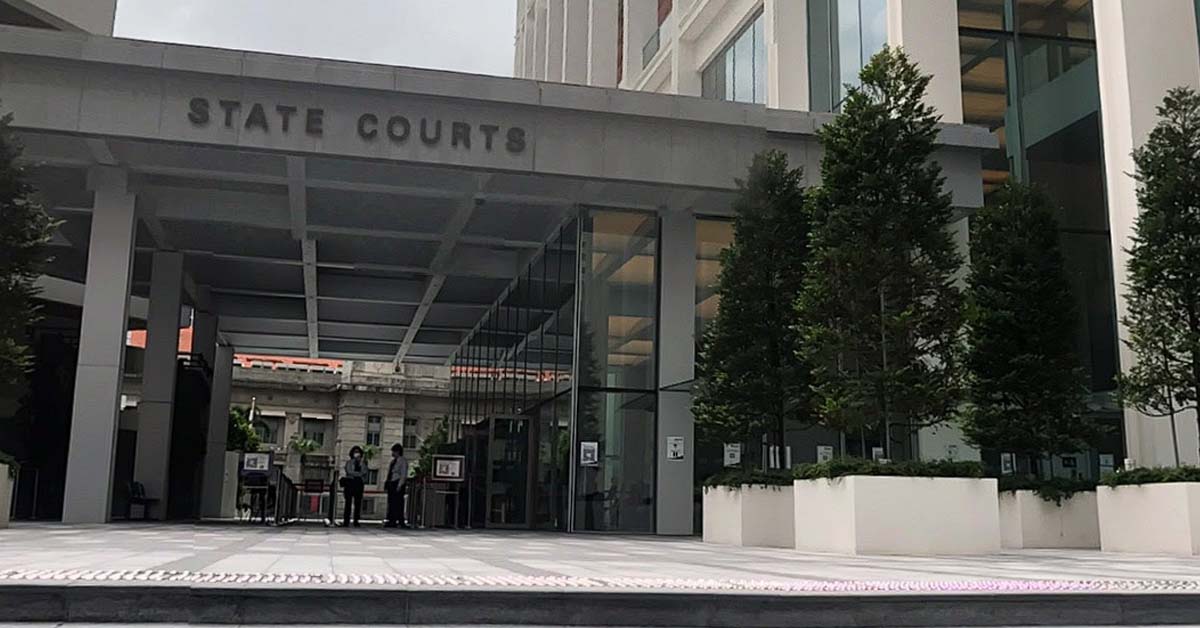
In a distressing turn of events driven by financial desperation, a 31-year-old Malaysian woman, Jayanthi Subramaniam, has been sentenced to six weeks’ jail after pleading guilty to a charge of cheating.
The incident unfolded when she tricked a friend she met on TikTok, Mr. Rajappan Balakrishnan, into paying S$5,000 to secure non-existent jobs for two foreign workers at DHL Singapore, according to TODAY.
The Deceptive Scheme
Jayanthi, at the time employed by a cleaning company and deployed to work at DHL Singapore, capitalized on her position to concoct a fraudulent plan. Facing financial difficulties and unable to repay her loans, she devised a scheme to exploit her friend’s trust.
In August, she contacted Mr. Rajappan, an India national, claiming that she had job opportunities at DHL Singapore for foreign workers. Despite not working for DHL and the jobs being non-existent, Jayanthi offered to submit work pass applications for these fictional positions.
The Convince and Con
To convince Mr. Rajappan of the legitimacy of the opportunity, Jayanthi went to great lengths. She sent photographs and videos of DHL’s premises, creating an illusion of authenticity. Despite initial suspicion due to the high requested amount of S$5,000 for each worker, Jayanthi managed to persuade Mr. Rajappan by reducing the sum to S$2,500 as a deposit for each person.
Believing in the authenticity of the job offers, Mr. Rajappan sought his friend’s help to transfer S$5,000 into Jayanthi’s account. However, suspicions arose when Jayanthi, after the transfer, began asking for more money without providing any formal documentation related to the job opportunities.
The Unraveling and Legal Action
Realizing the deception, Mr. Rajappan filed a police report on October 1, leading to Jayanthi’s arrest three days later. Unfortunately, the S$5,000 was not recovered, as Jayanthi had utilized the funds to repay her debts and cover personal expenses, including her mother’s medical bills.
During the court proceedings, Jayanthi, emotionally distressed, pleaded for forgiveness, attributing her actions to the dire financial situation related to her mother’s medical expenses. She made a full restitution on December 4.
Dine-and-dash, the act of leaving a restaurant without settling the bill, is a practice that affects the livelihood of restaurant owners and staff.
For Warung Ijo, a new Indonesian eatery in MacPherson, dealing with such incidents has become a recurring challenge.
The Unfortunate Incident
On December 2, Warung Ijo’s Facebook page shared a (now-deleted) post containing a photo of diners who departed without settling their bill, amounting to $61.90.
The incident underscores the ongoing struggle that small businesses face in ensuring they receive fair compensation for their services.
Repeat Offenses
According to Shin Min Daily News, this was not an isolated occurrence for Warung Ijo. The report highlighted that it was the fifth time the eatery experienced a dine-and-dash incident since its opening in August. The unpaid bills varied between $20 and $70, accumulating to a total of approximately $300.
The manager of Warung Ijo, surnamed Huang, expressed frustration over the situation. While the eatery owner covered the first unpaid bill, subsequent incidents meant that the staff had to bear the financial burden collectively.
The unpaid bills have become a significant concern, with Huang stating that the amounts that they have to cover for the customers who fled are “not a small amount”.
Financial Toll on the Business
The cumulative effect of multiple dine-and-dash incidents takes a toll on the financial stability of Warung Ijo. Small and new establishments often operate on thin profit margins, and absorbing repeated losses of this nature becomes unsustainable.
Warung Ijo initially collected payment upon ordering but changed its practice to collect payment after the meal. The adjustment was made in response to customer feedback, as diners found it inconvenient to make additional orders after payment.
Unfortunately, this change in payment policy has left the eatery vulnerable to dine-and-dash situations.
Update
In subsequent Facebook updates, Warung Ijo has since stated that the case is now closed as the customer has reached out to them and made the payment that they owed.
In a bizarre turn of events, a 71-year-old taxi driver found himself in a web of legal troubles when a routine traffic stop escalated into a shocking incident.
Ong Seng Hwee Jeremiah, the elderly driver, not only faced charges for using his phone while driving but also for causing severe injuries to a traffic policeman, according to 8World News.
He is currently out on a bail of $5,000 and his next hearing has been scheduled for 2 January next year.
The incident occurred at approximately 5:15 pm on October 9, 2022, along Farrer Road. What initially began as a traffic violation quickly spiraled into a confrontation that left a traffic policeman with a fractured arm.
The Incident Unfolds
The drama unfolded when the traffic policeman observed Ong allegedly using his phone while driving along Holland Road.
Instead of complying with the signals to stop, Ong reportedly ignored the officer, eventually coming to a halt near an overhead bridge at Farrer Road. What happened next was nothing short of shocking.
The traffic police officer then pulled the taxi over and reached into the car to switch the engine off, just in case the driver tried to escape.
Ong then rolled his car window up and rapped the police officer’s arm inside, before dragging him on the road for a few meters.
The SG Road Vigilante uploaded footage capturing the entire incident. The video, which circulated on social media, shows the traffic officer with his arm caught in the taxi’s window as Ong drives away.
It was reported that the officer later sustained a fracture on his upper arm.
Following the incident, the police swiftly arrested Ong, while the injured officer received treatment at a local hospital.
S’pore Police’s Statement Last Year
MAN ARRESTED FOR VOLUNTARILY CAUSING HURT TO A PUBLIC SERVANT
A 69-year-old man was arrested on 9 October 2022 for voluntarily causing hurt to deter a public servant from discharge of his duty.
On 9 October 2022 at about 5.15pm, a Traffic Police (TP) officer was patrolling in the vicinity of Holland Road when he spotted a taxi driver who was purportedly using his mobile phone while driving and signalled for the driver to stop. However, the driver ignored the officer and continued driving. The TP officer followed him and eventually managed to stop the taxi driver along Farrer Road. During the engagement with the 69-year-old driver, the driver was uncooperative and refused to provide his particulars. Sensing that the taxi driver might drive off again, the TP officer reached his hand out to turn off the ignition button of the vehicle. However, the driver allegedly wound up his window and drove off before the officer could remove his arm. As a result, the officer was dragged along the road for a few metres before the driver stopped and wound down the window.
The taxi driver was subsequently arrested for voluntarily causing hurt to deter a public servant from discharge of his duty. The 34-year-old officer was conveyed conscious to the hospital and received outpatient treatment. Police investigations are ongoing.
The offence of voluntarily causing hurt to deter a public servant from discharge of his duty, under Section 332 of the Penal Code 1871, carries an imprisonment term of up to seven years, and a fine or caning. Under Section 65B of the Road Traffic Act 1961, any driver who holds in his or her hand a mobile communication device and operates any of its communicative or other functions while the vehicle is in motion on a road or in a public place, is guilty of an offence and is liable on conviction to a fine not exceeding $1,000, an imprisonment term not exceeding six months, or both.
All motorists are urged to drive safely and to abide with traffic rules and regulations. The Police have zero tolerance towards such brazen acts of violence towards Police officers or public servants carrying out their duties. The Police will not hesitate to take firm action against those who endanger the safety of our officers or other road users.
PUBLIC AFFAIRS DEPARTMENT SINGAPORE POLICE FORCE 12 October 2022 @ 10:10 AM
In a significant move to support platform workers facing work-related injuries, the National Trades Union Congress (NTUC) has announced the launch of the NTUC Care Fund (Work Injury Relief) scheme.
Starting from January 15 next year, eligible platform workers, including taxi drivers, private hire drivers, and delivery riders, can apply for S$250 of NTUC FairPrice vouchers to alleviate financial challenges while awaiting aid from other relief schemes, according to TODAY.
The NTUC Care Fund (Work Injury Relief) Scheme
This new initiative aims to provide crucial bridging relief for platform workers who often face inherent risks while on the road for extended periods. NTUC highlighted the challenges these self-employed workers encounter, particularly during adverse conditions such as heavy rain. The scheme is designed to offer immediate financial support to these workers who would otherwise have to wait nearly two weeks for assistance from government or community bodies due to processing times.
NTUC Secretary-General Ng Chee Meng emphasized the immediate concerns of freelance point-to-point and delivery workers when facing hardships at work, especially injuries that may hinder their ability to continue earning. As these workers are not covered under the Workplace Injury Compensation Act, accidents often lead to reliance on personal savings, given the potential lack of personal accident insurance coverage.
The Support Mechanism
The scheme, funded through contributions from affiliated platform worker associations and matched by the NTUC-U Care Fund, initially amounts to S$120,000. This contribution is expected to aid around 480 workers, providing them with immediate relief during the critical period following a work-related injury. The vouchers offer a buffer for workers who might be grappling with financial obligations such as vehicle rental fees while unable to work.
Application Process and Eligibility
To qualify for the vouchers, injured workers must be prescribed medical or hospitalization leave for a continuous period of five or more days. They need to submit an application within two weeks from the date of the issued leave or within two weeks after being discharged from the hospital. Proof of work and earnings for the period of the accident, such as a platform app screenshot showing the member’s name and activity status, must accompany the application.
Only one application is allowed for the same accident, and members are limited to a maximum of two unique approved applications in a year. Additionally, applicants must have maintained a minimum of three months continuous paid membership at the point of application.
Future Prospects
The scheme will be reviewed in mid-2024 to ensure sustained support for injured workers, potentially leading to a second tranche of assistance. NTUC’s commitment to providing ongoing assistance underscores its dedication to the welfare of platform workers facing challenges in the gig economy.
In a proactive step towards safeguarding the financial well-being of platform workers, the NTUC Care Fund (Work Injury Relief) scheme reflects the evolving landscape of workers’ rights in the gig economy, setting a precedent for similar initiatives globally.
A power outage took place earlier today (6 December) at the Bangunan Sultan Iskandar (CIQ) checkpoint in Johor, unleashing unmitigated chaos as travellers found themselves in long snaking queues for hours in the dark, trying to clear immigration to enter Singapore, according to TODAY.
The Unfolding Situation
The disruption, initiated by a power outage that commenced at 8 pm on December 5, cast the JB Customs, Immigration, and Quarantine (CIQ) complex into darkness.
The outage impacted not only the lighting but also the electronic gate (e-gate) facilities, exacerbating the congestion within the premises.
Travellers in Limbo
Reports emerged of travellers enduring hours-long waits just to navigate through immigration. Videos circulating on social media, particularly on TikTok, captured the extent of the chaos.
In one video, individuals stood in serpentine queues inside the complex, illuminated only by the light of their mobile devices.
With the power outage rendering the complex in near darkness, travellers had to rely on the flashlights and screen brightness settings of their mobile devices to navigate the facility.
The inconvenience caused by the lack of lighting and operational e-gate facilities highlighted the vulnerability of critical infrastructure during unforeseen events.
Responding to the situation, the Immigration and Checkpoints Authority (ICA) in Singapore acknowledged the delays and cautioned travellers to check traffic conditions before embarking on their journeys.
Further compounding the travel woes, the ICA reported heavy departure traffic at Woodlands Checkpoint, citing a tailback from Malaysia.
The unexpected power outage underscored the vulnerability of the checkpoint’s infrastructure and raised questions about the lack of contingency measures to address such emergencies.
Chief Minister’s Reaction
Johor Chief Minister Onn Hafiz Ghazi, expressing his dismay at the “huge consumer problem and a disgrace to the state,” took action by instructing energy company Tenaga Nasional Berhad (TNB) and infrastructure authority Jabatan Kerja Raya to promptly resolve the issue.
He questioned the absence of a backup electricity supply, pointing to a letter from TNB dated November 27, indicating a planned temporary interruption in electricity supply from 8 pm on December 5 to 4 am on December 6.
In the fast-paced world of online shopping, where the click of a button can bring products to your doorstep within days, the notion of waiting for years seems preposterous.
However, Nitin Agarwal, a tech blogger in Delhi, found himself in this bizarre situation, sparking conversations about the challenges faced by online shoppers in India.
Four-Year Wait
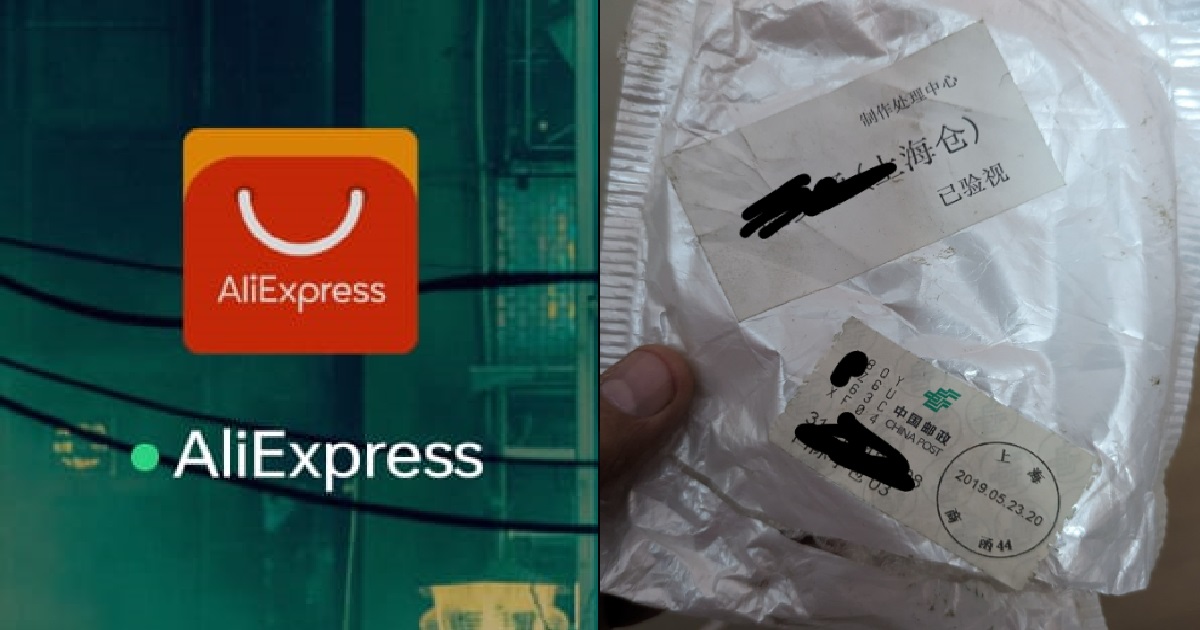
Mr. Agarwal’s online shopping journey took an unexpected turn when a parcel, ordered four years ago, finally arrived. The contents? Two belts for his wife and a lamp.
And although the items were in good, pristine condition, he couldn’t get the lamp to work because the batteries needed to operate it were not available in India.
Social media platforms buzzed with curiosity as users speculated about the peculiar journey of Mr. Agarwal’s parcel. In a YouTube video, he unveiled the contents and shared his astonishment at going “viral.”
Ban on AliExpress in India
The virality of Mr. Agarwal’s tweet was heightened by the context of the AliExpress ban in India since 2020. Under section 69A of the Information Technology Act, the Indian government can ban apps, foreign or local, deemed threats to national security.
Other notable apps that have been banned by India under their Information Technology Act include TikTok, Player Unknown Battle Ground (PUBG) and Shein.
On the whole situation, he added that “techies” like him depend on shopping apps such as AliExpress to source the parts and components that he needs for his electronics, which are not easily available or accessible in India.
India made the claims that the banned apps had been collecting their data and sending it to nations that they deemed “hostile”.
In his YouTube video, Mr Agarwal beseeched the government to unblock the apps as some items are not available in India and can only be sourced overseas.
Never lose hope! So, I ordered this from Ali Express (now banned in India) back in 2019 and the parcel was delivered today. pic.twitter.com/xRa5JADonK
— Tech Bharat (Nitin Agarwal) (@techbharatco) June 21, 2023
In a shocking incident, a 35-year-old Indonesian maid, Yuni Lestari, has been sentenced to eight weeks’ jail for a series of thefts from her employer, coupled with the audacious move of showcasing her stolen loot on TikTok. The case sheds light on the breach of trust, repeated offenses, and the evolving landscape of crime in the digital age.
A Pattern of Deceit
The Independent Singapore reported that Yuni Lestari, employed in 2019 to care for her employer’s children and manage household chores, faced three theft charges. Despite being caught stealing multiple times by her 43-year-old female employer, the helper continued her illicit activities. The employer’s leniency, despite repeated offenses, allowed the maid to persist in her wrongful actions.
Confronted about the thefts, Yuni Lestari, in a bid to evade consequences, apologized profusely and implored her employer for leniency. Astonishingly, her employer granted her second chances, trusting that the remorse expressed was genuine. Little did the employer know that this act of forgiveness would be taken advantage of repeatedly.
In November 2021, the maid escalated her theft by pilfering a diamond necklace valued at S$2000 and a Cartier bracelet from her employer’s bedroom. What makes this case stand out is the audacious move of the maid showcasing her ill-gotten gains. Yuni Lestari went on to upload a video on TikTok, flaunting the stolen necklace, evidently driven by the desire to “show off” on social media.
A Breach of Trust
The prosecution highlighted the severity of the maid’s actions, emphasizing the abuse of her employer’s trust. Despite the forgiveness extended to her, Yuni Lestari persisted in her criminal activities, demonstrating a blatant disregard for the trust placed in her. The items stolen during these incidents, including the diamond necklace and Cartier bracelet, were never recovered.
Upon facing the consequences of her actions, Yuni Lestari pleaded guilty to two out of three theft charges. The remaining charge was taken into consideration during sentencing. The eight-week jail term serves as a legal repercussion for the breach of trust, repeated thefts, and the added audacity of flaunting stolen items on a widely used social media platform.
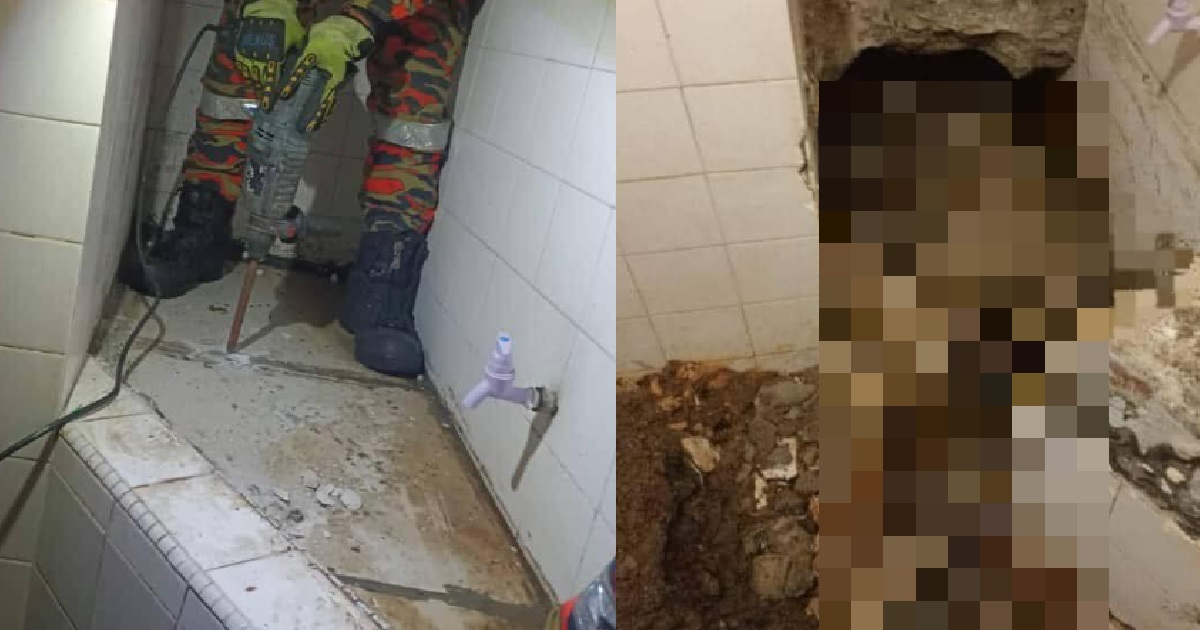
In a shocking turn of events, an unidentified woman’s body was discovered encased in cement in the bathroom of a rental house in Klang, Malaysia, on Dec. 3, 2023. This unsettling incident has sent shockwaves through the community, raising concerns about the safety and screening processes for rental properties.
Discovery of the Body
The gruesome discovery unfolded when a foreign worker repairing a leak in the house’s roof stumbled upon the distressing sight in the water tank. The New Straits Times reported the incident, highlighting the gravity of the situation and the immediate need for investigation.
Upon learning of the disturbing finding, the house owner took swift action, reporting the matter to Malaysian authorities. The involvement of a foreign worker adds a layer of complexity to the case, emphasizing the need for a thorough and transparent investigation.
Arrest of a Foreign National
In a recent development, a 53-year-old foreign national has been arrested in connection with the case. The New Straits Times reported that the individual would be remanded for seven days, marking a crucial phase in the ongoing investigation.
As the arrested individual faces legal proceedings, a manhunt is underway for two other suspects linked to the grim discovery. The police are actively pursuing leads to locate and apprehend these individuals, underscoring the urgency of resolving the case.
Background of the Tenants
The two identified suspects, Ranjit Singh and Mandeep Singh, were previous tenants of the house, renting it from August 2019 to October 2021. This revelation adds a layer of complexity to the case, prompting questions about the tenants’ activities during their stay.
Cemented Water Tank Discovery
Before re-renting the property, the homeowner conducted an inspection and noticed a section of the bathroom wall was cemented. Upon questioning, the previous tenants claimed they had sealed the water tank to prevent rat droppings. This explanation raises suspicions about their true intentions.
The shocking truth came to light when a repairman, fixing a leak in the roof, informed the homeowner about the hidden corpse. Feeling uneasy, the owner promptly asked the latest tenant to vacate the premises and lodged a police report, initiating a series of events leading to the extraction of the body.
Police Report and Investigation
The police received the owner’s call on Dec. 3, triggering a meticulous operation to break the concrete and extract the remains. The challenging process took over two hours, emphasizing the intricacies of the case and the dedication of the authorities to uncover the truth.
Scheduled for Dec. 6, the post-mortem examination at Shah Alam Hospital is a crucial step in understanding the circumstances surrounding the woman’s death. The examination is expected to provide valuable insights into the cause and timeline of the tragedy.
The Police would like to remind members of the public to remain vigilant against scams which compromises WhatsApp accounts through the use of fake “WhatsApp Web” phishing websites. These fake websites deceive users into authorising access to their WhatsApp accounts for scammers, who will then impersonate users to scam their family and friends. This advisory is pursuant to the advisories issued by Police on 27 October 2023 and 13 November 2023.
In these cases, victims who wished to access their WhatsApp accounts through their desktops would search for the official “WhatsApp Web” using online search engines. Thereafter, victims clicked on the first few search results generated by the online search engines without further verifying the Uniform Resource Locators (URLs) addresses due to convenience. However, these URLs do not point to the genuine WhatsApp Web website, but to fake phishing websites embedded with genuine QR codes extracted from official website of WhatsApp.
When victims use the QR code scanning function in WhatsApp on their mobile devices to scan the QR code in these phishing websites, they would notice that the websites would be unresponsive and did not lead the user to the WhatsApp Web’s interface on their desktops. At this time, the scammers would have already remotely gained access to the victims’ WhatsApp accounts. Scammers would then exploit these compromised WhatsApp accounts to impersonate the user and reach out to victims’ family or friends in their contact list and seek financial loans for a variety of reasons. Their family or friends would then receive request to transfer monies to unfamiliar bank accounts or PayNow numbers.
As the victims could still access their compromised WhatsApp accounts while scammers were concurrently using the victims’s accounts to conduct scam activities, the victims would only discover that their WhatsApp accounts were compromised when they were notified by their contacts of unusual requests such as asking for loans or to transfer monies from them.
The Police would like to advise members of the public to refrain from using “WhatsApp Web” and to adopt the following precautionary measures:
Do not use “WhatsApp Web”. If there is a need to, always ensure that you are using the official WhatsApp Desktop App or visiting the official website from WhatsApp for “WhatsApp Web”. The official URL address is https://web.whatsapp.com;
Never share your WhatsApp account verification codes, personal information, banking details and OTPs with anyone;
Beware of unusual requests received over WhatsApp, even if they were sent by your WhatsApp contacts;
Protect your WhatsApp account by enabling the ‘Two-Step Verification’ feature. This can be done by opening WhatsApp and go to ‘Settings’ > ‘Account’ > ‘Two-step verification’ > ‘Enable’;
Check your linked devices regularly. Go to WhatsApp Settings > Linked Devices to review all devices linked to your account. To remove a linked device, tap the device > Log Out. For instructions on how to activate additional security features on WhatsApp, visit https://www.whatsapp.com/security; and
Set a device code and be aware of who has physical access to your phone. Someone who has physical access to your phone might use your WhatsApp account without your permission.
If you have any information relating to such crimes or if you are in doubt, please call the Police Hotline at 1800-255-0000, or submit it online at www.police.gov.sg/iwitness. All information will be kept strictly confidential. If you require urgent Police assistance, please dial ‘999’.
For more information on scams, members of the public can visit www.scamalert.sg or call the Anti-Scam Helpline at 1800-722-6688. For instructions on how to activate additional security features on WhatsApp, visit https://www.whatsapp.com/security. Fighting scams is a community effort. Together, we can ACT Against Scams to safeguard our community!