25.8 C
Singapore
Monday, April 20, 2026
Ads
Home Blog Page 3209

AL CAPONE @ CUPPAGE TERRACE OFFERING GUINNESS FOR $1, BRING YOUR OWN MUG

0

Everyone who drinks for a while and have tried Guinness from the tap would appreciate a pint of Guinness fresh from the tap.

Often, prices of Guinness from the tap goes from $10 or more.

Today, one of our very own reader who also loves Guinness saw a good promotion on Facebook and asked us to share with everyone this promotion that is happening today.

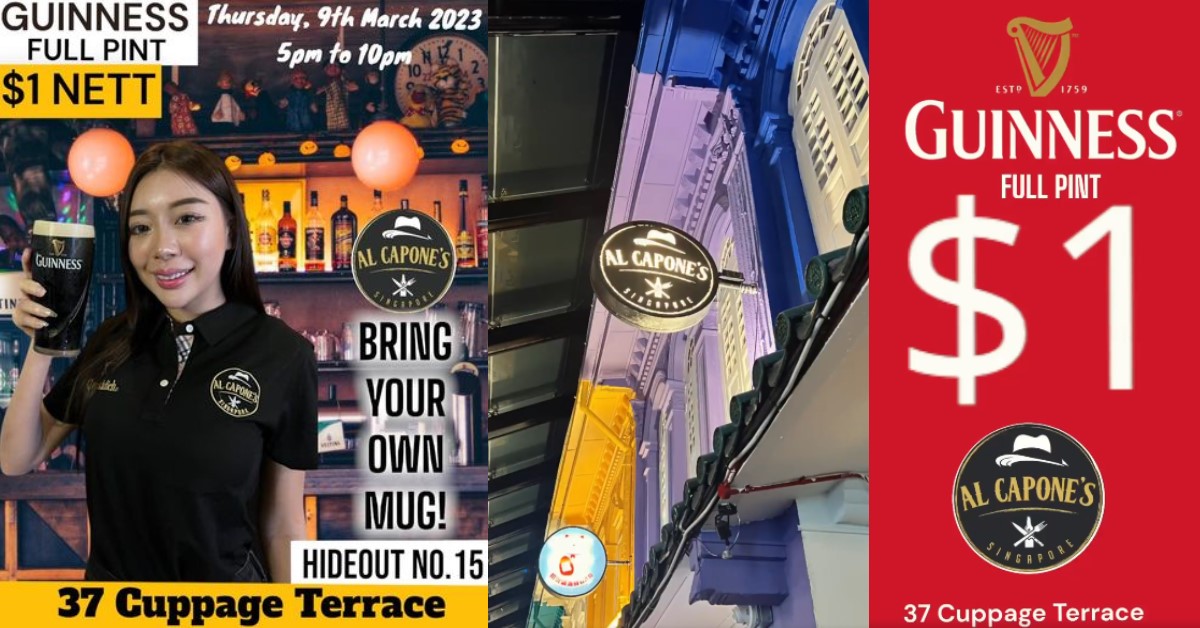
Al Capone at Cuppage Terrace offering Guinness for $1 on 9 March

According to a Facebook post by Al Capone’s Cuppage Terrace, they would be pouring a full pint of Guinness for their patrons at a price of only $1 nett on 9 March 2023.

The only catch is that you must bring your own mug.

The promotion lasts from 5pm to 10pm.

Terms and Conditions

Here are the terms and conditions to get the Guinness at $1.

  • One Full Pint Pour At A Time For One Person
  • Unlimited Guinness
  • No Queuing For Friends
  • Exact Change Required . No Refund.
  • Payments in Cash only.
  • Drink Moderately

Hurry jio your kakis down now to take advantage of this promotion!

Here is what Al Capone’s Cuppage Terrace posted

Image source: Al Capone’s Cuppage Terrace/Facebook

NEWLYWEDS PAID S$155K TO TAKE PHOTO WITH TAIWAN VARIETY HOST JACKY WU

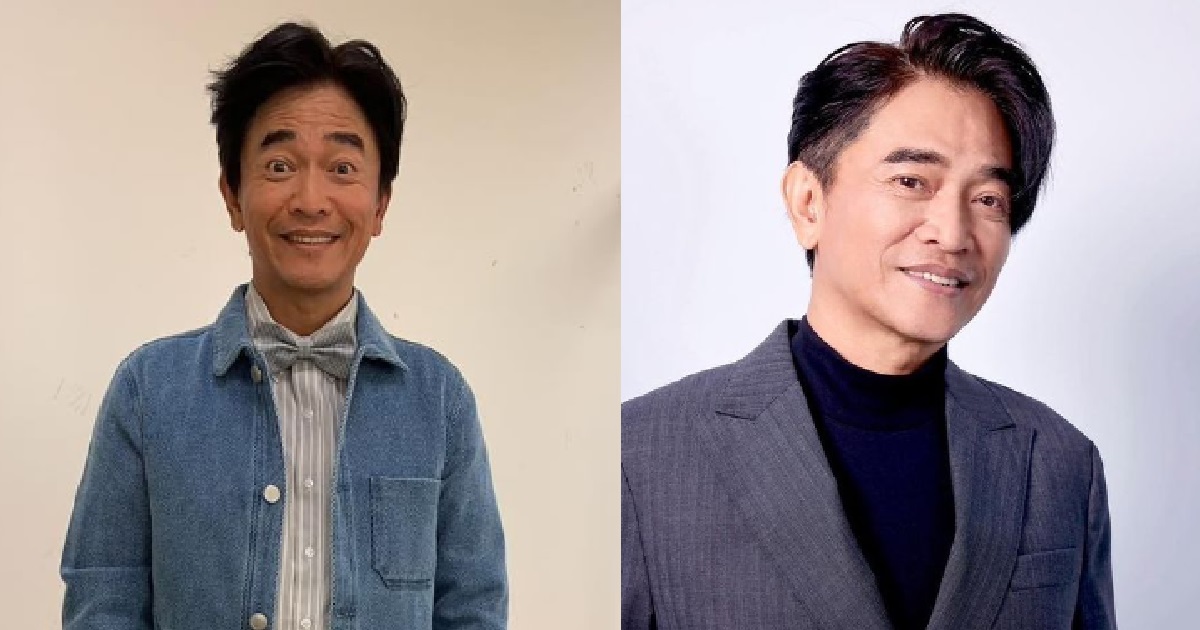
60-year-old Taiwanese variety host Jacky Wu was paid 800,000 yuan (or SGD$155,000) for an interesting wedding gig in Shenyang, China.

He was speaking during an appearance on the variety show Super Followers and shared about the job offer that he received a few years ago.

He said that he had initially wanted to turn down the gig because he had just finished a show in Shanghai and wanted to go back to Taiwan and see his family.

However, he was told that his manager had already accepted the job offer for him, which came with a hefty payment of about 800,000 yuan.

Revealing more about the gig itself, Wu said that he reached the venue in Shenyang at about 7pm, and that the wedding had already begun.

He added that there was a big banquet in front and a table backstage where only he and his manager were eating at.

He recalled seeing a few A-list actors and singers present, along with other artistes that were performing at the wedding.

He patiently waited for his timeslot until 8.40pm, and the newlyweds then approached him and told him that the groom had proposed to his wife by singing Wu’s song “Do You Remember Me Only On A Night Like This” from his debut album back in 1987.

Wu then found out that the groom’s father was a rich steel tycoon in China, and the couple then took two photos with Wu.

Wu ended up not taking to the stage and didn’t perform that night, but was still given a presidential suite at a high-end hotel to stay in.

He also received the payment for his “performance” that didn’t happen that night, essentially earning 800,000 yuan just to take two photos with the couple.

The easiest money he has ever made.

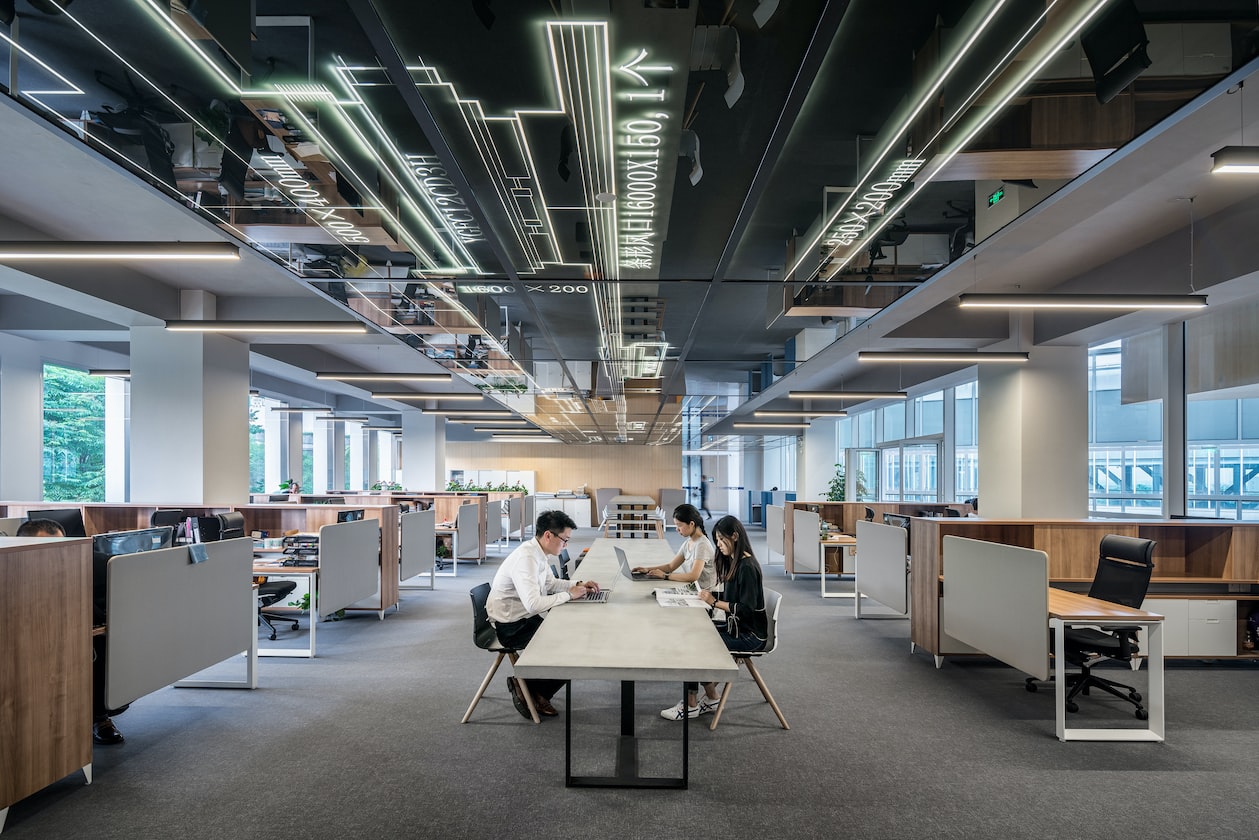
MAN ‘PLEASURED’ HIMSELF AT HIS OFFICE, BOSS WALKED IN & CAUGHT HIM IN THE ACT

0

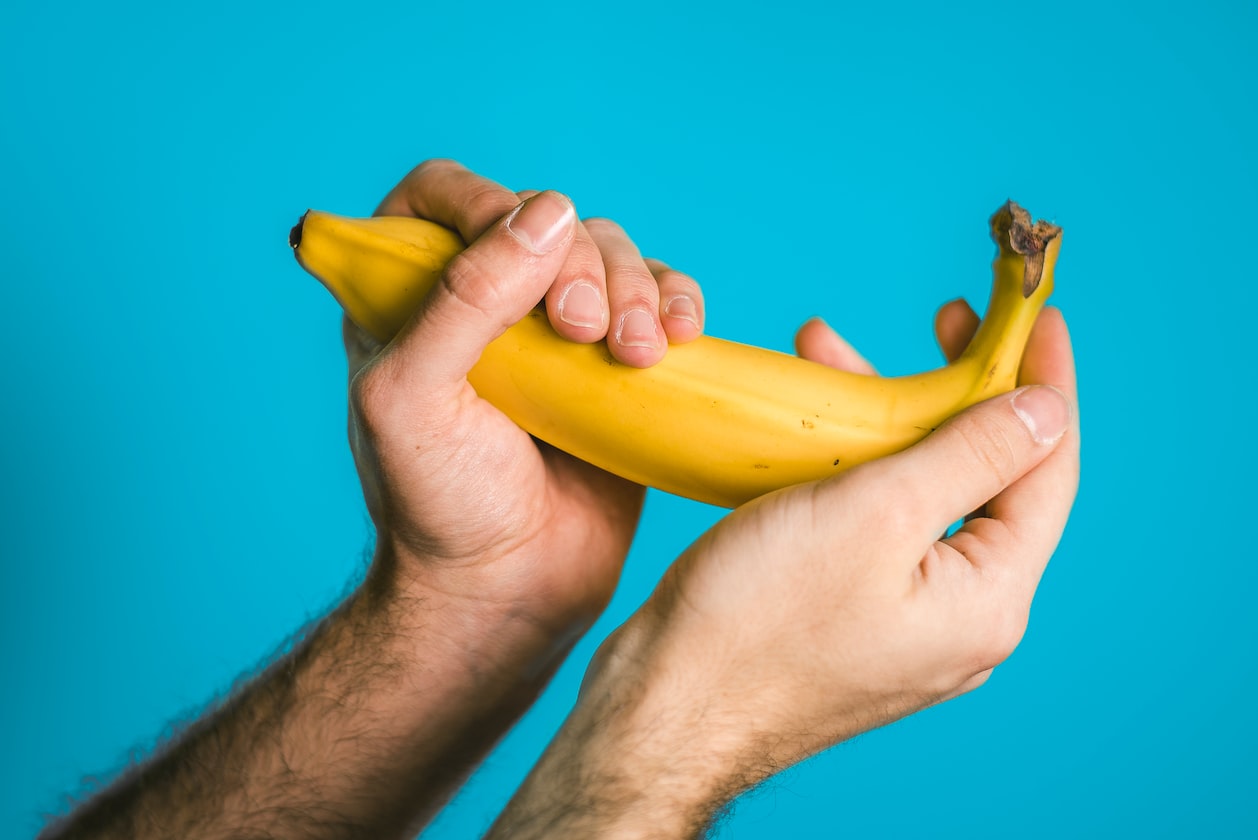
It was a slow day at work, and I was feeling a little bored and restless. I decided to take a quick break and indulge in a little self-pleasure in the privacy of my office.

I PCC till I didn’t know that my boss walked in and caught me in the act

However, I must have gotten too caught up in the moment because I didn’t hear my boss enter the room.

Before I knew it, my boss caught me in the act. I was completely mortified and didn’t know what to do. My boss was equally embarrassed and quickly exited the room.

The rest of the day was incredibly awkward, and I felt like I couldn’t face my boss or colleagues. I was afraid that I might lose my job or that my reputation at work would be ruined.

In the end, I decided to talk to my boss and apologize for my behavior. I explained that it was a moment of weakness and that I was deeply embarrassed by the situation.

Lucky for me my boss told me that all was fine

My boss was surprisingly understanding and forgiving, but the incident definitely had an impact on our professional relationship.

I learned a valuable lesson that day about boundaries and professionalism in the workplace.

It’s never okay to engage in inappropriate behavior at work, and it’s important to always maintain a level of respect and professionalism towards colleagues and superiors.

SPEEDING DRIVER BEATS RED LIGHT AND ALMOST RUNS OVER ELDERLY WOMAN @ HOUGANG

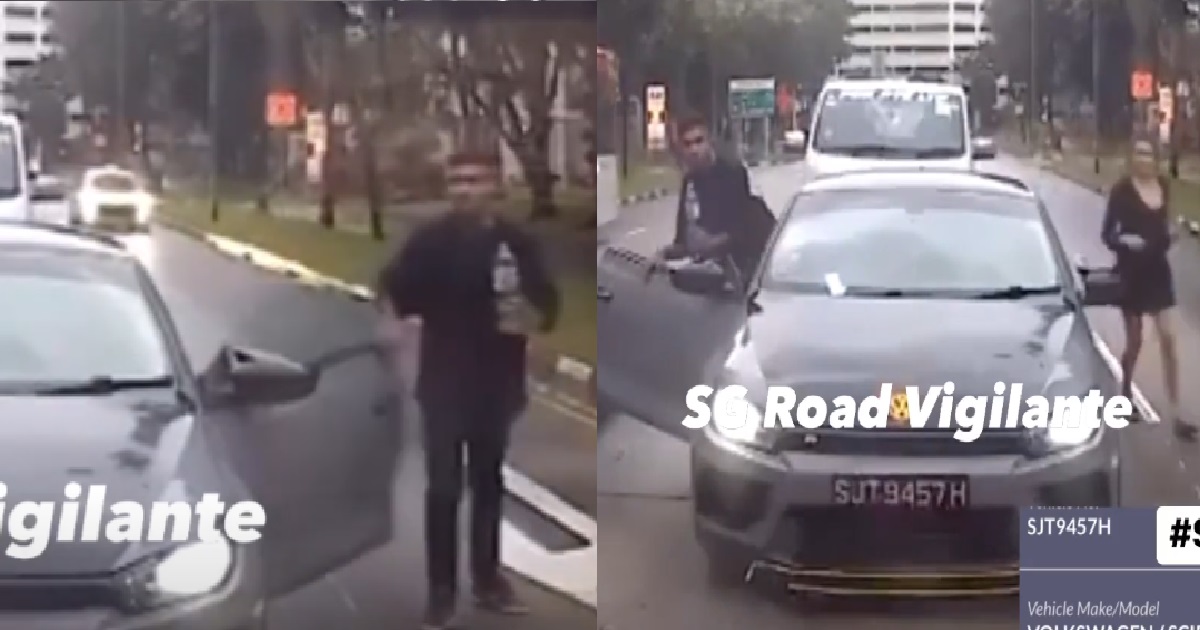
A video emerged online showing a Volkswagen Scirocco speeding and beating a red light, and almost running over an elderly woman who was about to cross the road.

The incident happened on 5 March at about 7.45am, along Hougang Street 51, and was captured on the dashcam of a car that was at the scene at the time.

The driver of the car was seated in the passenger seat initially, before alighting from the vehicle in the middle of the road and stumbling towards the drivers seat to take over the wheel from a woman, who ran over to the passenger seat.

It is unclear if the man was intoxicated at the time, but he was stumbling clumsily as he made his way to the driver’s side of the car.

Shortly after, he was seen speeding down the road before wheezing past a red light, as an elderly woman waited to cross the road, almost running her over.

Here is what a camcar driver said

“i was making my way to Hougang Green for breakfast. At 0745 hours this was at Hougang Street 51 this Grey Scirocco beat a red light and nearly hit an elderly woman as you can see in the video.”

Potential penalties

Beating red light

Drivers found guilty of failing to conform to traffic light signals face a composition fine of $400 for light vehicles and $500 for heavy vehicles.

They also face 12 demerit points and if a driver accumulates 24 or more demerit points within 24 months, their license will be suspended.

Reckless driving

Drivers who drive in a manner that is dangerous to the public is guilty of an offence under section 64(1) of the Road Traffic Act (RTA).

Persons found guilty face a jail term of up to 1 year and/or a $5,000 fine.

If the driver causes hurt, he faces a jail term of up to 2 years and a fine of $10,000.

If the driver caused grievous hurt, he faces a jail term of betewen 1 to 5 years and disqualified from driving for at least 8 years.

If the driver’s actions caused death, he faces a jail term of up to 2 to 8 years and disqualified from driving for at least 10 years.

EMPLOYEES FORCED TO ACCEPT A 20% PAY CUT AND WORK 6 DAYS A WEEK OR LEAVE

0

I was quite happy with my job, or so I thought. I had been working for this company for five years now, and I thought I was finally in a good place. I had worked my way up the ladder and was making a decent salary and I had weekends off.

Boss forced us to take 20% pay cut and work 6 days a week or leave

Then, out of the blue, our boss announced that we were all going to be forced to accept a 20% pay cut and work 6 days a week instead of five. We were told that if we didn’t accept these terms, then we would have to leave.

At first, I was in shock. I had been working so hard and I had just started to get a bit of financial stability. I was worried about how I would be able to make ends meet with a 20% pay cut.

We went to our boss and asked why he was doing this, but he refused to give us any answers. We were left with no choice but to accept the terms or leave. I felt so helpless and powerless in that moment.

The next few weeks were full of stress and anxiety. I was constantly worrying about how I was going to make ends meet. I felt like all my hard work had been for nothing and that I was being taken advantage of by my boss.

I tried to look for other jobs, but it seemed like no one was hiring. I felt like I was stuck in this situation and I had no other option but to accept the new terms and work 6 days a week.

I continued to work for the company, but my morale was low. I was unhappy and resentful towards my boss. I felt like he had taken advantage of my situation and that I had no other choice but to accept his terms.

Finally, after months of hard work and misery, I was able to find another job. I was relieved to have a new job, but I was also angry and disappointed in my boss and the company.

I had been taken advantage of and forced to accept a pay cut and work 6 days a week. I felt like I had been treated unfairly and that I had no other option but to accept the terms or leave. This experience has definitely left me feeling jaded and mistrustful of employers.

59 Y.O S’PORE MAN DIED FROM HEART ATTACK ON 1ST DAY OF HOLIDAY IN BANGKOK

0

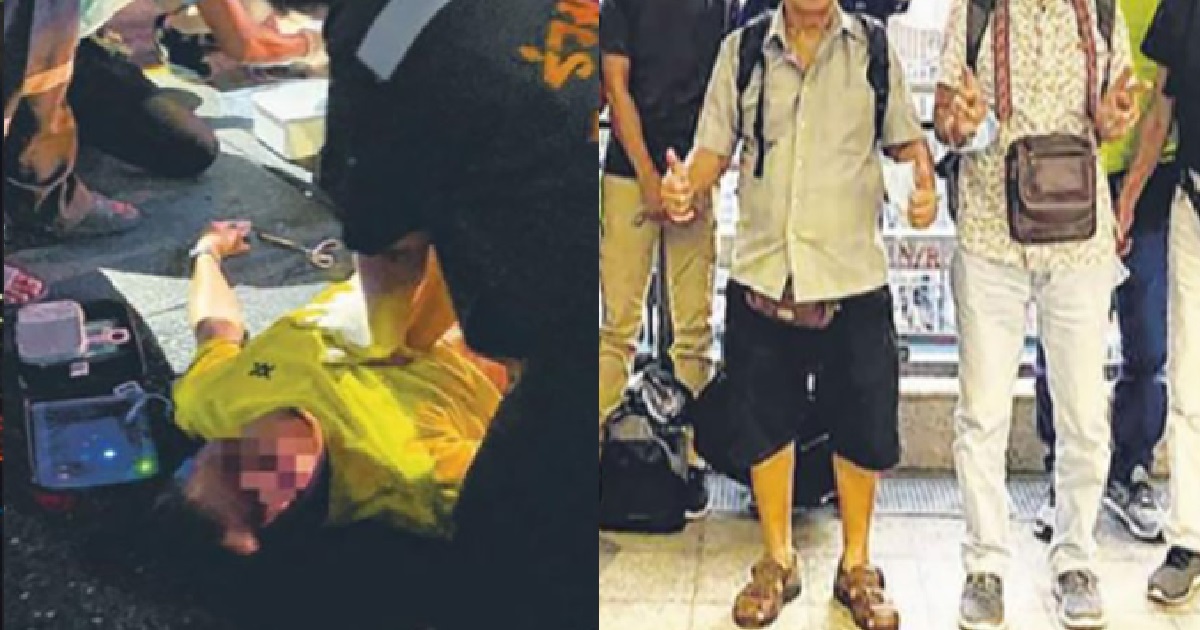
A 59-year-old Singaporean man who was in Bangkok, Thailand for a holiday with his friends, suffered a heart attack on the very first day of his vacation and died, according to Shin Min Daily News.

The man, 59-year-old Mr Wu, was with 9 of his friends for a 4-day 3-night trip in Bangkok, but he suffered a heart attack moments after reaching Thailand.

At the time, the group had alighted from the plane and went for dinner, according to the deceased’s wife Madam Wu, who spoke to SMDN.

She said that her husband had felt pain in his chest after dinner, and on the way back to the hotel, he suddenly fell to the ground after having a heart attack.

One of his friends then immediately performed CPR on him and called for an ambulance.

Madam Wu received the tragic news from her husband’s friend’s daughter, who showed up at her door at night bearing bad news.

She was in disbelief and couldn’t believe it, before informing her sisters and daughters and they booked one-way tickets to Thailand to see her late husband.

She was helped by the Singapore embassy in Thailand, and was told by her husband’s insurance company that it would take a few days to arrange for the body to be sent back to Singapore.

Refusing to delay any longer, she paid out of her own pocket to arrange for her husband’s body to be sent back to Singapore, and she said that whether the insurance company will pay for it, “we shall see”.

The deceased was the breadwinner of the family, and leaves behind three daughters; with the youngest still schooling. and the oldest pregnant.

Madam Wu said that he was excited about being a grandfather and had planned to sell his car in exchange for a 7-seater vehicle so that he could take his grandson out.

‘AH SIA’ GOT A HONDA FOR HIS 21ST, UPSET THAT IT IS NOT A BMW

0

My 21st birthday was supposed to be the best day of my life. After all, I was finally an adult and could do whatever I wanted.

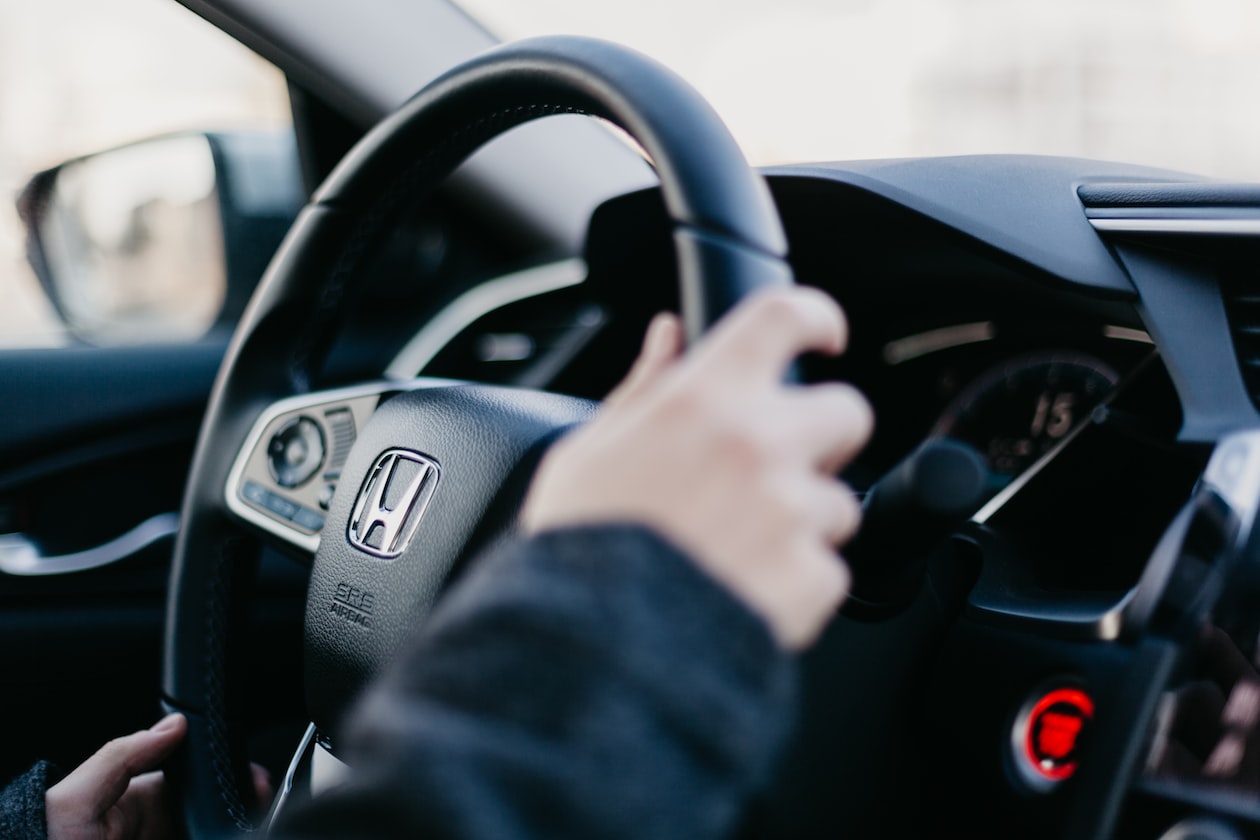
Parents bought me a brand new Honda, but I was not happy

My parents had promised to give me a surprise present and when I went to the carpark with my parents to collect my ‘present’ that morning, I was sure it would be something special. But I was so disappointed when I saw what it was – a Honda.

My friends had all been given BMWs by their parents on their 21st birthdays and I was so envious of them. I felt like my parents didn’t love me as much as they loved my friends. I wanted to feel special, not just like an average Joe with a Honda.

I tried to be grateful for the Honda, but all I could think about was how my friends had it so much better than me. I wanted to show off my new Honda, but I knew everyone would compare it to my friends’ BMWs and I would feel embarrassed.

So instead of celebrating, I spent the day sulking in my room, feeling sorry for myself. I was so angry at my parents for not giving me what I wanted.

I thought they should have known better than to give me a Honda when they knew I wanted a BMW.

It took me a while to get over my disappointment, but even though I did get over that disappointed stage, I still was not very pleased with the Honda I got and wished that I got a BMW instead.

I know I should be counting my blessings and grateful that I got a Honda, but whenever I see my friends with their BMWs, I cannot help but feel left out of their social circle.

“THERE WAS HIGH LEVEL OF TRUST IN S’PORE DURING PANDEMIC” – COVID WHITE PAPER

0

The government has released the White Paper on Singapore’s Response to COVID-19, in the wake of Singapore stepping down its remaining COVID-19 measures and moving into a new endemic COVID-19 normal. The White Paper reviews our whole-of-nation response to the pandemic and sets out key lessons for Singapore, so we can be better prepared for the next pandemic.

The White Paper draws on the insights from an internal review by former Head of Civil Service Mr Peter Ho and the findings from after-action reviews conducted by government agencies. The White Paper seeks to synthesise the breadth of perspectives gathered to offer as balanced and objective an account as possible of our COVID-19 response.

Reviewing our experience

What we did well

Relative to other countries, Singapore has done well in protecting both lives and livelihoods. We maintained the resilience of our healthcare system and successfully vaccinated the population. The assistance rendered to businesses helped them stay afloat. Livelihoods were preserved through support schemes for self-employed persons as well as skills training and job placements for displaced workers. As a result, we averted a deeper economic crisis. We also kept our air, port and land links open so global supply chains could continue to flow to and through Singapore and the region.

The pandemic affected daily life. Many Singaporeans experienced severe life stressors at home and at work. Public and private organisations worked hand-in-hand to offer additional financial, social and mental well-being support to the vulnerable. We continued educating our students throughout the pandemic, avoiding the severe learning disruption faced by students in other countries. Most of all, there was a high level of trust in fighting this pandemic together – between the government and people, amongst individuals and communities.

What we could have done better

There were also areas where we could have done better, in particular, the outbreak in the migrant worker dormitories during the early months of the crisis which could have spiralled out of control and overwhelmed our healthcare system. Another was our ability to scale contact tracing efforts to keep pace with the intensity and pace of outbreaks. The TraceTogether (TT) programme faced slow adoption initially, and suffered a setback with the disclosure that TT data could be used for criminal investigations following earlier reassurances that the data would only be used for contact tracing.

The government could have also been less definitive in its initial position on mask-wearing, and more flexible in its implementation of safe management measures. The constantly changing rules were frustrating for businesses and individuals. The switch to home recovery also happened too quickly, causing significant anxiety among infected individuals and their family members.

Finally, on border measures, we had to make difficult decisions around whether to close the borders, whom the restrictions should apply to and thereafter, when to reopen borders. On hindsight, we could have tightened borders more aggressively when confronted with signs of the virus spreading rapidly elsewhere, as well as eased them earlier as soon as it was clear that the main danger would no longer be from imported cases.

These issues have prompted reflection on the important lessons to be drawn from our COVID-19 experience. Where we have done well, we will cement these gains for the future. Where there have been shortcomings in our response, we will identify and tackle them, to be better prepared for the next pandemic.

Lessons for the next pandemic

The White Paper distils what we have learnt from COVID-19 into seven key lessons.

a. We need to better establish upfront which dimension to prioritise in each phase of dealing with the pandemic, and to adapt more quickly to the changing situation. Our crisis response should strike the right balance between precision and ease of implementation, and we should not let the perfect be the enemy of the good.

b. We need to strengthen Singapore’s resilience as an economy, society, and nation. We should maintain access to key resources by building buffers, invest in critical systems and capabilities to marshal our resources well, and enhance the adaptability of our infrastructure and workforce so we can pivot quickly when we need to.

c. We should deepen engagements and strengthen partnerships with the people and private sectors to harness their strengths. To do this well, the government must develop an eco-system to support and nurture these relationships in peacetime.

d. We should expand our healthcare capacity and strengthen public health expertise and organisational capabilities, especially in communicable disease control and management.

e. Science and technology ought to be better leveraged to support future pandemic crisis management and response. We need to invest in data engineering capabilities and interoperable systems across government, as well as enhance the cybersecurity of our systems.

f. The pandemic emphasised the need for the government to strengthen its structures and capabilities for crisis planning and management. In particular, the range of baseline scenarios for pandemic planning will need to be broadened.

g. Throughout the pandemic, clear and transparent public communications kept citizens informed and reassured, and psychologically prepared for what lay ahead. We will build on this foundation, and consider how else public communications could be leveraged to shape the national psyche in support of important shifts during a crisis.

In this crisis of a generation, we mounted a strong whole-of-nation response. The public, private, and people sectors banded together to deliver the best outcomes for our people and country. From healthcare workers and other essential personnel working on the frontlines, to private companies and community organisations who contributed their time and resources, as well as the many ground-up groups and volunteers who stepped forward to provide support to those in need — all went beyond the call of duty.

The government would like to put on record our appreciation for the dedication and sacrifices of all who were a part of our multi-year fight against COVID-19. We also thank all Singaporeans for displaying considerable fortitude in abiding by the measures imposed at different phases of the pandemic.Members of public may access the White Paper at go.gov.sg/covid-19-white-paper. The White Paper will be debated in Parliament later this month.

. . . . .
PRIME MINISTER’S OFFICE
8 MARCH 2023

CHIOBU TEACHER LOOK LIKE LISA FROM BLACKPINK, STUDENTS RUSH TO ATTEND HER CLASS

0

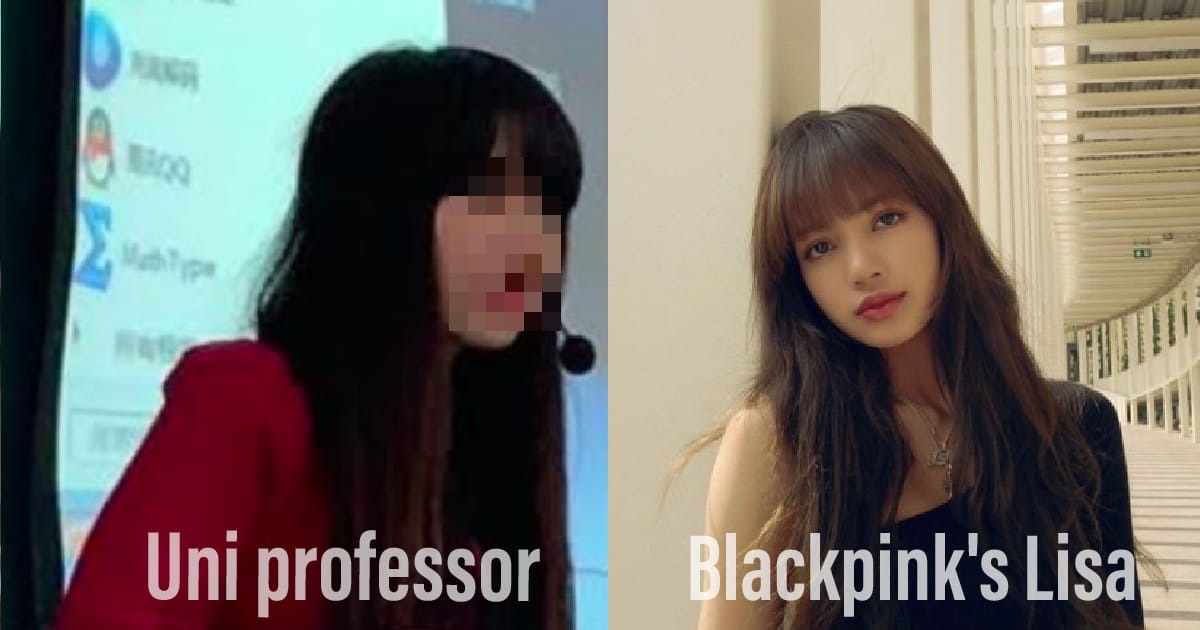
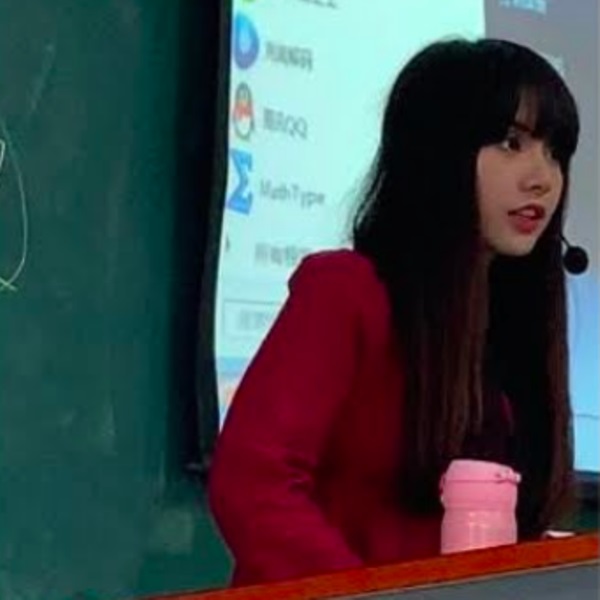
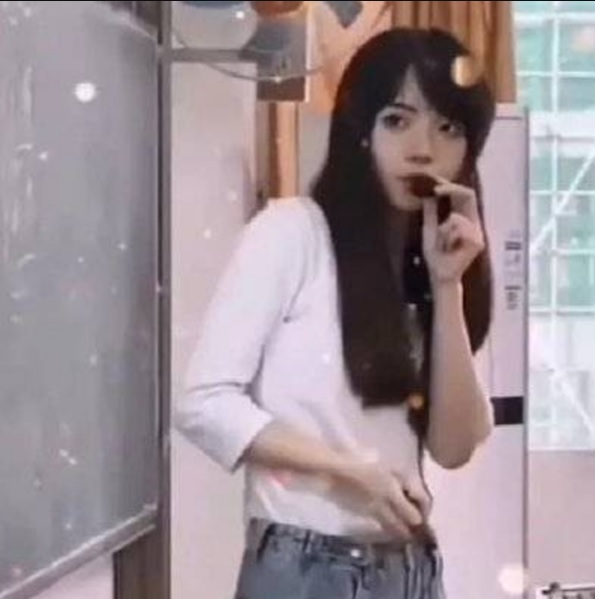
A history professor at a public university in China went viral for bearing a striking resemblance to Lisa from the k-pop girl group Blackpink.

Photos of the professor inside her lecture room, identified as Ms Tang, went viral on the Chinese social media website Weibo, after being shared online by her students.

The pop idol doppelganger is a history professor at the Chongqing University of Posts and Telecommunications, located in southwest China.

The resemblance between the professor and the k-pop idol is so uncanny, that students at the university are even lining up to attend her lectures.

Some of the students have even resorted to standing outside the lecture halls just to catch a glimpse of the teacher, who is slowly becoming something of a celebrity on campus.

Netizens online are comparing their likeness and scrutinising their resemblance, with many finding it uncanny at how similar they look to each other.

Miss Tang, however, appears to have chosen to remain low-key and private, with not much information about her being available online.

She only posted a statement on one of her social media accounts, saying that she didn’t expect the photos of her to go viral online.

Photos of the professor

Photos of Blackpink’s Lisa

GIRL SAYS THOUGH ANG MO ‘KKJ’ ARE ‘BIGGER’, THEY ARE NOT AS ‘HARD’ AS SPOREAN

0

For as long as I can remember, I have always been attracted to Caucasian men. They have a certain charm and appeal that I can’t help but be drawn to.

Growing up in Singapore, I was exposed to a lot of different cultures and races, but I think Caucasian men were the ones that really caught my eye.

Realised that ang mo might be bigger but not as hard as Singaporeans

I had been with Singaporean men before prior to dating my first Caucasian, and I’ve noticed that a common stereotype is that Caucasian men have larger ‘kkj’ when compared to Singaporean men.

This is something that I can’t really deny – I’ve seen it firsthand! The thing is, however, that I’ve noticed that although their ‘kkj’ are indeed bigger, they don’t get as hard as Singaporean men.

I’ve discussed this issue with some of my close friends who are also into Caucasian men, and the consensus is that Caucasian men are really bigger in terms of ‘kkj’ size but not as hard as Singaporean men.

Of course, it’s hard for me or anyone to pinpoint for sure why this is the case. All I know is that I’ve been in relationships with both Caucasian men and Singaporean men and I’ve noticed a difference in terms of the size and hardness.

I’m sure there are plenty of other factors that could contribute to why one man might be more harder than another.

That being said, I still think that Caucasian men are incredibly attractive and I wouldn’t change my preference for them any time soon.