Senior Minister of State for Health, Janil Puthucheary, said in parliament on 25th February, that Singapore in unlikely to move out of Phase 3 anytime soon.
This is because of the dynamic Covid-19 situation, both domestically and internationally.
Puthucheary was responding to Yio Chu Kang’s MP, Yip Hon Weng, who asked whether there are specific criterias that needs fulfilling before Phase 3 restrictions could be lifted.
Puthucheary added that ever since Singapore commenced Phase 3, parts of the world has seen an increasing number of Covid-19 outbreaks, as well as the emergence of the motr transmissible variant of the Covid-19 coronavirus.
Singapore is also facing an increase in unlinked community cases.
He said:
“Phase 3 is a new normal which will last until the time when there is evidence on vaccine effectiveness in preventing future outbreaks, and a substantial proportion of the population is vaccinated, and the rest of the world also has the virus under control.”
He also stressed that the government is collecting more evidence to prove that the vaccines that are approved, can also prevent transmission; as well as its effectiveness against the new variation of the coronavirus, which is more infectious.
Images source: Janil Puthucheary Facebook and Google Maps
A video emerged showing a angmoh girl sneezing three times, which sounded like “aw ah, aw ah, aw ah”, which is coincidentally what the first part of the gang poem sounds like.
To which the yp then added himself into the video, chanting the second part of the poem.
Facebook user Lynn Lee recently posted on Facebook after she visited her family to meet the family of Piang Ngaih Don who was cruelly tortured to death by her employers. She talked to her mother to understand the full story on how she actually came to Singapore to work.
Here is the full story.
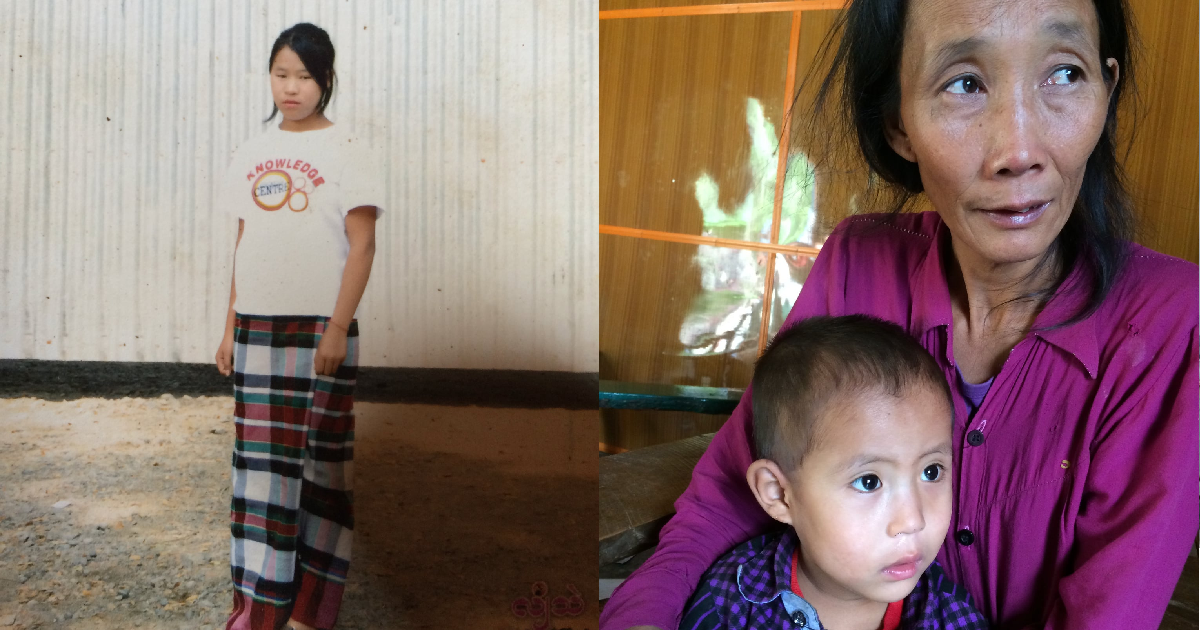
In 2016, we went to Dimpi Village in Chin State, Myanmar, to meet the family of Piang Ngaih Don, a domestic worker who’d died under suspicious circumstances in Singapore.
Piang, a struggling single mother with a young son, was working as a construction labourer when a recruitment agent approached her. She left Myanmar soon after. The next time her family heard from her was a year later. Piang, whose employers had insisted she worked with no rest days or a mobile phone, had somehow managed to call them. She said she wanted to go home. Two weeks later she was dead.
Domestic workers in Singapore are entitled to one rest day a week, but employers can ask that they forfeit these in exchange for financial compensation. Such arrangements are often couched as mutually beneficial – employers get the help they need, workers get to earn extra income. But the truth is, the power imbalance makes it hard for young women like Piang to say no. They’re new to the country, typically poorly educated, and probably heavily indebted. Every domestic worker I’ve spoken to say their agents charged them hefty recruitment fees. To pay, they would have to let their agent take the first six to 12 months of their salaries. Piang must have been under pressure to start work as soon as soon as possible, to reduce her debt as quickly as she could.
Source: lynn lee Facebook
If she’d been allowed a rest day, Piang might still be alive today. She might have been able to tell a friend her employers were abusing her, or perhaps even go to the police for help. Instead, stuck in a house with no one to turn to, she was starved, kicked, burnt with a hot iron, tied to a window, flung around like a rag doll, and hit on the head and neck. In court recently, one of her employers admitted to killing her. The ST report of what took place is a difficult read (see link below). Piang must have spent her last days in agony. When she died, she weighed just 24kg. What sort of monster treats another human this way?
Maybe they saw her as a lesser being. Poor and unworthy of respect, let alone kindness. But in Dimpi, Piang was loved. Villagers wept as they spoke of her. Relatives asked that we find out the truth. Her sister introduced us to Piang’s little boy. He was two and a half years old then. Big eyes. Runny nose. It was not surprising he was unwell. Dimpi was cold and dusty, and there wasn’t enough food or running water. Everyone in the village seemed to have a cough.
The morning before we left, Piang’s family showed us a cross they’d made to mark her grave. Painted on it were her name and birthdate. June 13, 1992. It was then that we realised that when Piang left home, she was a month shy of turning 23 – the minimum age for domestic workers in Singapore. Her agent had bribed an immigration official to alter the date of birth on her passport.
Piang didn’t know the rules, of course. But her agent did, and didn’t care. If only they’d waited until she was the right age, Piang would have arrived a month later. In all likelihood, she would have gone to work for a different family. She might still be alive.
But someone else would have taken her place.
I’ve been thinking about this a lot these last two days. Piang’s employers treated her with unimaginable cruelty. It was impossible that they didn’t know they were doing something wrong – one of the alleged perpetrators is in fact, an ex-cop. And yet they did what they did. And the only reason I can think of is that they believed they would get away with it – because no one in Singapore pays much attention to domestic workers.
A doctor who examined Piang was concerned enough to ask questions, but not concerned enough to demand further checks. Piang’s agent called her twice but didn’t detect any problems. The Ministry of Manpower says there are safeguards in place to take care of domestic workers. But the truth is, whatever measures we have right now just aren’t good enough. Domestic workers are not even covered under Singapore’s Employment Act. And without more checks and balances, without mandatory rest days, without a system that recognises that they deserve better protection, without a fundamental shift in our attitude, anyone in Piang’s position would have probably suffered the same fate.
Our documentary about underage domestic workers in Singapore
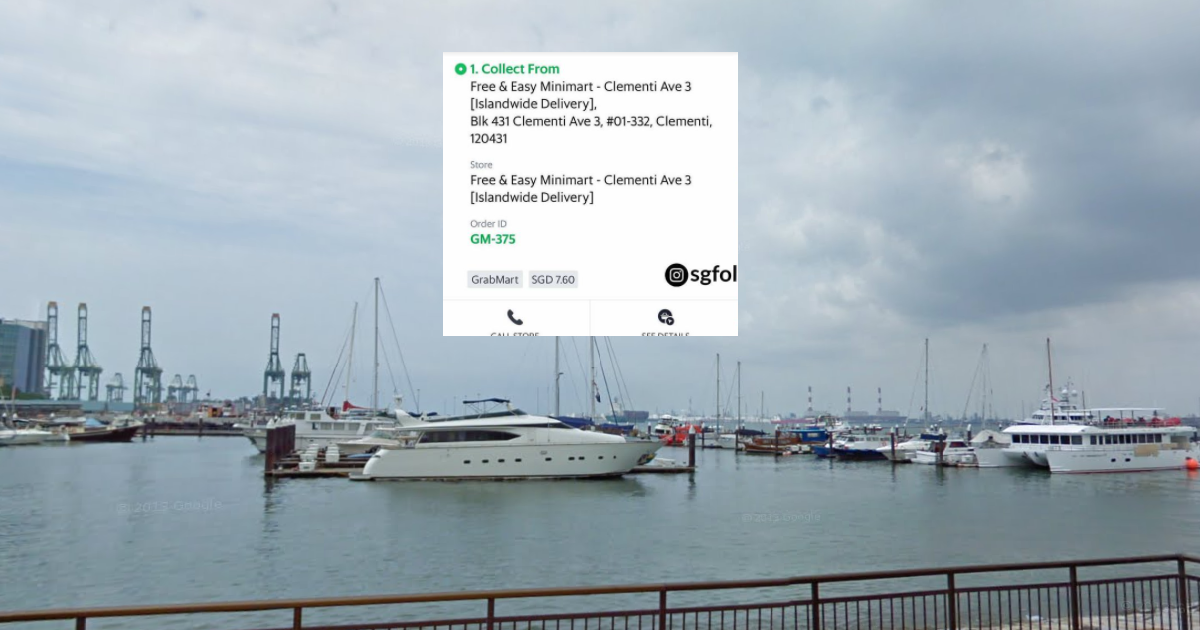
Screenshots of a Grab delivery order was recently uploaded on the Instagram page sgfollowsall after a customer requested delivery to his boat which is off the shore of west coast. He even requested for the delivery rider to swim to his boat to deliver his purchases in return for a $10 tip.
Here is the full story.
customer ask me swim and deliver to his boat aft i call and ask him sia. He say $10 extra tip if i swim to the sea.